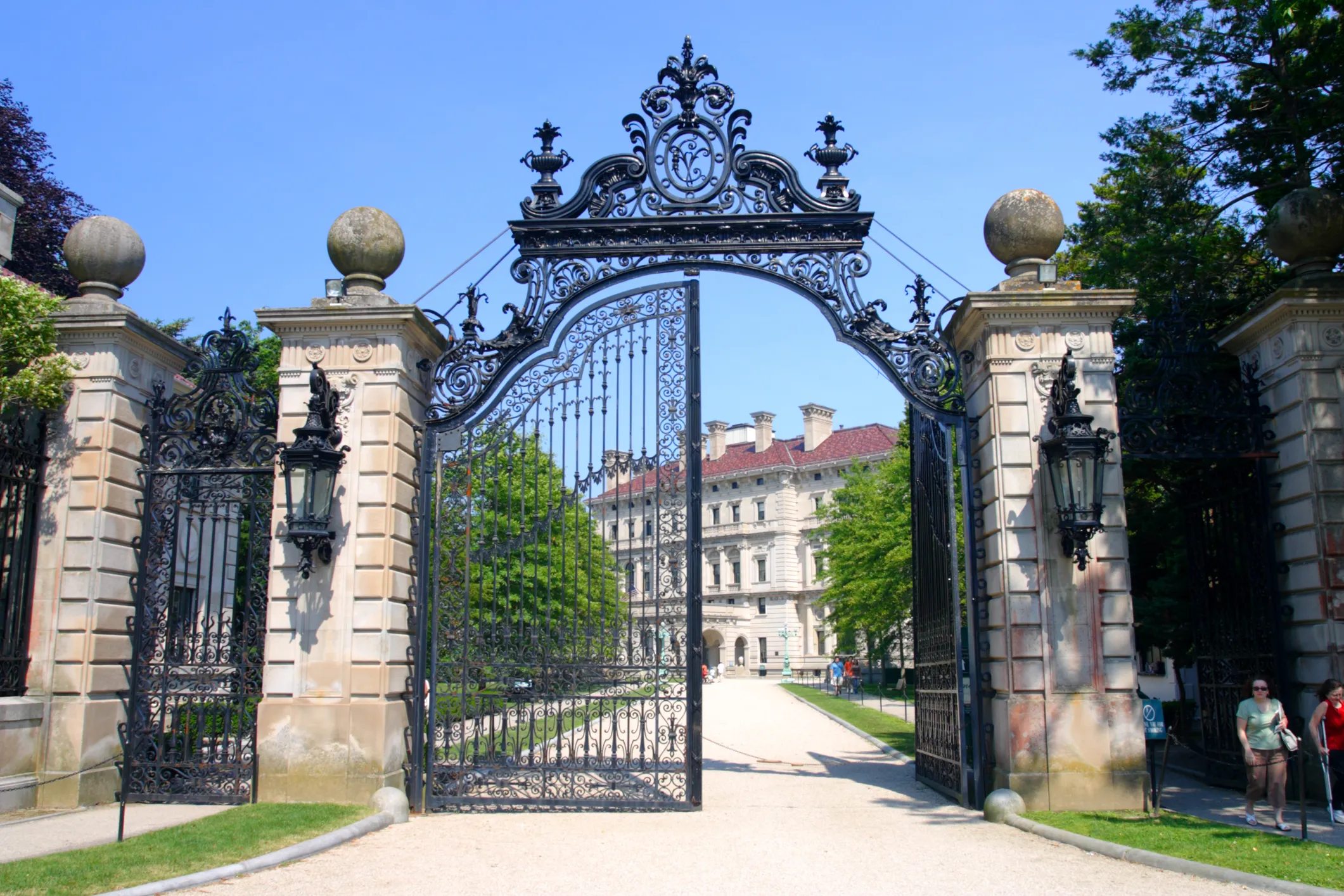
Nowhere else in America does the sheer ambition and staggering wealth of the Gilded Age feel more tangible than in Newport, Rhode Island. Once a quiet summer colony for the well-to-do, this coastal city transformed in the late 19th century into the nation’s most exclusive resort, a veritable playground where industrial titans like the Vanderbilts, Berwinds, and Belmonts competed to build the most magnificent “summer cottages” imaginable. These were not cottages in any conventional sense, but opulent palaces of marble, stone, and gold, designed by the era’s most celebrated architects to host a whirlwind of lavish parties, dinners, and social rituals.
Today, this architectural legacy is meticulously preserved for the public, primarily by two key organizations. The Preservation Society of Newport County (PSNC), founded in 1945 to save a single colonial-era home, now stewards the grandest of the Gilded Age mansions. Complementing its work is the Newport Restoration Foundation (NRF), established in 1968 by the forward-thinking heiress Doris Duke to preserve the city’s broader architectural fabric. Together, they offer visitors an unparalleled journey through American history, art, and architecture. This guide details every tourable mansion in Newport, providing the essential history and visitor information needed to step back in time.
The Breakers
The undisputed king of Newport’s mansions, The Breakers is the grandest and most famous of the summer cottages. It stands as a breathtaking symbol of the Vanderbilt family’s immense social and financial power during the Gilded Age.
Background: Located at 44 Ochre Point Avenue, this 70-room palazzo was built between 1893 and 1895 for Cornelius Vanderbilt II, President of the New York Central Railroad. After a fire destroyed the family’s previous wooden home on the site, Vanderbilt commissioned the preeminent architect of the age, Richard Morris Hunt, to create a fireproof masterpiece of steel, brick, and limestone. The design is a classic Italian Renaissance palazzo, featuring a 50-foot-high Great Hall, imported marbles, and lavish details like platinum-leafed relief panels in the Morning Room.

Touring Information: The Breakers is open daily year-round, making it the most accessible of the mansions. The standard visit is a self-guided audio tour (available on the Newport Mansions app; bring your own headphones), with a special version for families. For a deeper dive, consider the guide-led Beneath The Breakers tour, which explores the underground tunnel, boiler room, and advanced technology that powered the estate, or the unprecedented Third Floor Preservation in Progress Tour, which offers a look at the private family living quarters for the first time in the mansion’s history.
Longing for a trip to Newport? Check out hotel availability here!
Marble House
A social and architectural landmark, Marble House ushered in Newport’s era of opulent stone palaces, setting a new standard for extravagance that would define the Gilded Age.

Background: Located at 596 Bellevue Avenue, Marble House was built between 1888 and 1892 by William K. Vanderbilt as a 39th-birthday present for his wife, Alva. Designed by Richard Morris Hunt, the Beaux-Arts masterpiece was inspired by the Petit Trianon at Versailles. It cost $11 million (an astronomical sum for the time), with $7 million spent on over 500,000 cubic feet of marble. After her divorce, Alva Vanderbilt Belmont became a leading figure in the women’s suffrage movement, hosting rallies at the charming Chinese Tea House on the property’s seaside cliff.
Touring Information: Marble House is open daily for most of the year. Admission includes a self-guided audio tour of the house and grounds.
The Elms
Modeled after a mid-18th-century French chateau, The Elms is a stunningly elegant estate that combined European sophistication with the latest American technology.

Background: Completed in 1901, The Elms was the summer residence of coal baron Edward Julius Berwind and his wife, Herminie. Located at 367 Bellevue Avenue, the house was designed by architect Horace Trumbauer to resemble the Château d’Asnières near Paris. Despite its historic appearance, it was among the earliest American residences wired exclusively for electricity, with no backup gas lighting. The estate is also renowned for its magnificent grounds, which feature formal gardens, terraces, and marble pavilions.
Touring Information: The Elms is open daily through most of the year. While a standard audio tour is available, the must-do experience is the guide-led Elms Servant Life Tour. This fascinating tour takes you behind the scenes to the staff quarters, kitchens, coal cellar, and laundry rooms, revealing the complex “downstairs” world of the 40 servants required to run the household.
Rosecliff
Designed to be the ultimate setting for lavish entertaining, Rosecliff is a romantic vision of white-glazed terra-cotta that has hosted some of Newport’s most fabulous parties and served as a backdrop for major Hollywood films.
Background: Commissioned in 1899 by Nevada silver heiress Theresa “Tessie” Fair Oelrichs, Rosecliff was completed in 1902 at a cost of $2.5 million. Located at 548 Bellevue Avenue, it was designed by architect Stanford White of McKim, Mead & White, who modeled it after the Grand Trianon, a garden retreat of French kings at Versailles. Its defining features include Newport’s largest ballroom and a magnificent heart-shaped grand staircase.

Touring Information: Rosecliff is open daily during the primary tourist season (approximately May through November). It has famously appeared in films like The Great Gatsby (1974), True Lies, and 27 Dresses. Visitors explore the mansion via a self-guided audio tour.
Chateau-sur-Mer
A landmark of High Victorian architecture, Chateau-sur-Mer was Newport’s most palatial residence for decades, setting the stage for the Gilded Age palaces that would follow.
Background: Located at 474 Bellevue Avenue, this granite villa was originally built in an Italianate style in 1852 for William Shepard Wetmore, who made his fortune in the China trade. In the 1870s, his son, George Peabody Wetmore, hired Richard Morris Hunt to dramatically enlarge and redecorate the house, transforming it into the grand Second Empire-style mansion seen today. It is a treasure trove of Victorian furniture, wallpapers, and stenciling.
Touring Information: Chateau-sur-Mer is open daily during the high season (April through early fall). Visitors can explore with a self-guided audio tour.
Kingscote
A picturesque and historic home, Kingscote is a landmark of the Gothic Revival style and its construction marked the very beginning of the “cottage boom” that transformed Newport into a summer resort.
Background: This unique wooden cottage was built between 1839 and 1841 for George Noble Jones, a Southern planter, from a design by architect Richard Upjohn. Located at 253 Bellevue Avenue, the home was sold to the King family in 1864. In the 1880s, the family hired the firm of McKim, Mead & White to design a stunning new dining room, which features opulent decoration and Tiffany glass bricks.
Touring Information: Kingscote has a limited seasonal schedule, typically open on select days (Thursdays through Saturdays) from June to August. Check the Newport Mansions website for the exact operating schedule.
Isaac Bell House
A revolutionary design for its time, the Isaac Bell House is one of the nation’s premier examples of the Shingle Style, an architectural movement that laid the groundwork for modern American residential design.
Background: Built from 1881 to 1883 for cotton broker Isaac Bell Jr., this house at 70 Perry Street was an early masterpiece of the architectural firm McKim, Mead & White. The design creatively blends a relaxed, open floor plan and bamboo-style porch columns inspired by Japanese architecture with details from colonial American homes, all unified by a skin of natural wood shingles.
Touring Information: Like Kingscote, the Isaac Bell House has a limited seasonal schedule. It is typically open on select days (Sundays through Wednesdays) from June to August.
Hunter House
The anchor of Newport’s colonial past, Hunter House is one of the finest surviving examples of Georgian architecture from the city’s first “golden age” in the mid-18th century.
Background: Located at 54 Washington Street in the historic Point neighborhood, the northern half of the house was built around 1748 for prosperous merchant Jonathon Nichols Jr. It was later owned by other prominent figures, including Deputy Governor Joseph Wanton Jr. By the 1940s, the house was at risk, and its rescue by a group led by Katherine Warren in 1945 led directly to the formation of The Preservation Society of Newport County.
Touring Information: Hunter House offers guide-led tours only, which require advance timed tickets. The tour explores the lives of its wealthy merchant owners, colonial craftsmanship (including Townsend-Goddard furniture), and the history of the enslaved individuals who lived and worked on the property. It is open on a limited seasonal schedule (Sundays and Mondays, June through September).
Chepstow
This charming Italianate villa offers a glimpse into the life of a family with deep roots in American history, set within the context of a 19th-century Newport summer home.
Background: Chepstow was built in 1860 at 120 Narragansett Avenue by architect George Champlin Mason. It is particularly noted for showcasing the fine and decorative arts collected by the Morris family of New York, descendants of Lewis Morris, a signer of the Declaration of Independence.
Touring Information: Chepstow is open for guide-led, timed-ticket tours on a very limited seasonal schedule (Fridays and Saturdays, June through August).
Rough Point
The former home of heiress, philanthropist, and art collector Doris Duke, Rough Point offers a uniquely personal and modern story among Newport’s historic houses.
Background: Perched on a dramatic cliff at 680 Bellevue Avenue, the English Manorial-style home was originally built for Frederick W. Vanderbilt in 1887-1891 by the firm Peabody & Stearns, with grounds designed by Frederick Law Olmsted. It was purchased in 1922 by tobacco magnate James B. Duke, whose daughter Doris inherited it and made it her beloved Newport home. The museum is preserved largely as she left it upon her death in 1993, reflecting her eclectic tastes and housing a world-class art collection.

Touring Information: Operated by the Newport Restoration Foundation, Rough Point is open seasonally from April to November. Visitors take self-guided tours of the house and stunning oceanfront grounds. Special guided landscape tours are also offered, focusing on the Olmsted design and modern sustainability.
Belcourt of Newport
Perhaps the most eccentric of all the mansions, Belcourt was built not for a family, but for a bachelor and his beloved horses.
Background: Located at 657 Bellevue Avenue, Belcourt was constructed from 1891-1894 for Oliver Hazard Perry Belmont, a wealthy socialite and sportsman. Designed by Richard Morris Hunt and inspired by a Louis XIII hunting lodge, the entire first floor of the roughly 50,000-square-foot mansion was a lavish stable and carriage hall. When Belmont married Alva Vanderbilt in 1896, she undertook extensive renovations to make the home suitable for her legendary parties.
Touring Information: Belcourt is privately owned and is undergoing a massive, multi-year restoration. It offers unique guided Restoration Tours (Wednesday-Sunday) that give visitors a fascinating behind-the-scenes look at the craftsmanship involved in bringing the mansion back to its former glory. Seasonally, the mansion also offers a popular nighttime Candlelight Ghost Tour.
Other Properties of Note
The Breakers Stable & Carriage House (Newport): Built in 1895, this beautiful building houses the Preservation Society’s collection of historic carriages and is typically open Tuesdays–Thursdays in July and early August. Admission is included with any Newport Mansions ticket.
Green Animals Topiary Garden (Portsmouth, RI): Please note this property is located in the nearby town of Portsmouth, not Newport. It is the oldest and most northern topiary garden in the United States, featuring over 80 whimsical, sculpted shrubs in the shapes of animals and geometric figures. The 7-acre estate overlooks Narragansett Bay and is open daily in the summer and on weekends in the early fall.